










Key takeaways
- Fenchol is a bicyclic monoterpenoid alcohol, C10H18O, CAS 1632-73-1, that boils at about 201 to 202 C and smells camphor-like with a lemon edge.
- Ocimene is an acyclic monoterpene, C10H16, with a molecular weight of 136.23 g/mol. It exists as alpha and beta forms and smells sweet, herbaceous and slightly woody.
- Fenchol is a terpenoid because it contains oxygen. Ocimene is a terpene because it is a pure hydrocarbon, and it is an isomer of myrcene.
- Both are minor components of many plant oils, so they are rarely the lead note, but they shape the sweet, herbal and fresh edges of a profile.
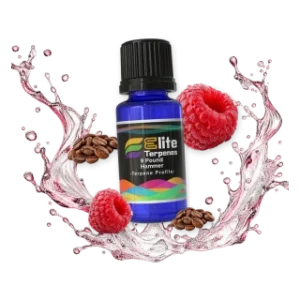
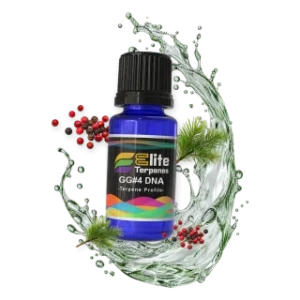
- Elite Terpenez sells tropical, herbal and pine-led profiles in several lines. They are blends, not single-molecule fenchol or ocimene products, and their listed aroma notes describe the smell rather than the contents.
- Never use a concentrated terpene undiluted. Test a small batch first and work from the calculator’s starting cuts.
What are fenchol and ocimene?
Fenchol and ocimene are both ten-carbon molecules built from two isoprene units, but they belong to different groups. Fenchol is a bicyclic alcohol with the formula C10H18O. Ocimene is an open-chain hydrocarbon with the formula C10H16. According to PubChem, fenchol weighs 154.25 g/mol and ocimene weighs 136.23 g/mol.
The names carry clues. Fenchol comes from fenchone, the ketone found in fennel oil, and the two molecules are close chemical relatives. Ocimene comes from Ocimum, the botanical name of basil, a plant rich in it. If you are new to the topic, our guide to what terpenes are covers the basics, and our terpenoids guide explains why fenchol counts as a terpenoid and ocimene as a terpene.
What do fenchol and ocimene smell like?
Fenchol smells camphor-like, with a clean, slightly lemony edge. PubChem records a camphoraceous aroma and lists its flavour profile as camphor and lemon. Ocimene smells sweet, herbaceous and slightly woody, and PubChem describes a warm herbaceous aroma. Perfumers also describe a green, tropical-fruit and floral lift in the beta forms.
How a blend reads depends on what sits beside them:
- Fenchol with pine and citrus: a crisp, clean, resinous freshness with a lemon lift.
- Fenchol with earthy notes: a dry, camphor-and-earth base that does not smell sweet.
- Ocimene with tropical fruit: a ripe, juicy, mango-like sweetness with a green edge.
- Ocimene with herbs and citrus: a fresh, basil-and-citrus impression that suits sativa-style flavours.
Where are fenchol and ocimene found in nature?
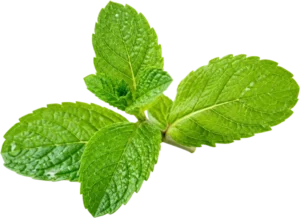
Ocimene is widespread. It is a well-known component of basil, mint, parsley, tarragon and many flowers, and it is also reported in mango and orchids. In flowers it is one of the airborne scents that plants release, which is why it is so often described as a green, floral and fruity note. It is also reported in the aromatic oils of many cannabis varieties.
Fenchol is rarer. It is reported in basil and in a range of other aromatic plants, usually as a minor component beside pinene, camphor and borneol, and in the aromatic oils of some cannabis varieties. Its ketone cousin fenchone is a main component of fennel oil, which is where both names come from. In both cases the amounts vary widely with plant variety, region, season and extraction method, so there is no single figure for how much any one plant holds.
Real plant oils are blends. A basil oil, for example, contains ocimene, linalool, fenchol and many other molecules, and the smell people call “basil” is the combination. A single-molecule note smells simpler and flatter than the plant it comes from.
What are the key facts about fenchol and ocimene?
The table below sets the two molecules side by side. Data comes from PubChem records for each molecule and boiling points are rounded. Ocimene is sold as a mixture of isomers, so the figures for the most common beta form are shown.
| Property | Fenchol | Ocimene (beta form) |
|---|---|---|
| Class | Bicyclic monoterpenoid (alcohol) | Acyclic monoterpene (hydrocarbon) |
| Formula | C10H18O | C10H16 |
| Molecular weight | 154.25 g/mol | 136.23 g/mol |
| CAS number | 1632-73-1 | 13877-91-3 (mixture of isomers) |
| Boiling point | About 201 to 202 C | About 175 to 177 C |
| Melting point | About 35 to 40 C | Liquid at room temperature |
| Physical form | White to pale yellow crystals or thick liquid | Colourless to straw-coloured mobile liquid |
| Aroma | Camphor-like, lemon | Sweet, warm, herbaceous |
A few more points help with handling. Ocimene is a mixture of isomers: alpha-ocimene (CAS 502-99-8), (E)-beta-ocimene (CAS 3779-61-1) and (Z)-beta-ocimene (CAS 3338-55-4) all appear in supplier listings. PubChem records a density of about 0.80 g/mL for ocimene, so it is lighter than water. Fenchol melts near body temperature, so a cool bottle may set to crystals and need gentle warming to room temperature before use.

How are fenchol and ocimene different from their relatives?
Both molecules have close relatives that are easy to mix up. Ocimene has exactly the same formula as myrcene, C10H16, and both are open-chain hydrocarbons with three double bonds. The difference is where those double bonds sit, which makes myrcene earthy and musky and ocimene sweet and herbaceous. Our myrcene guide covers the earthy twin.
| Molecule | Class | Formula | CAS number | Boiling point | Aroma |
|---|---|---|---|---|---|
| Fenchol | Monoterpenoid (alcohol) | C10H18O | 1632-73-1 | About 201 to 202 C | Camphor-like, lemon |
| Beta-ocimene | Acyclic monoterpene | C10H16 | 13877-91-3 | About 175 to 177 C | Sweet, warm, herbaceous |
| Myrcene | Acyclic monoterpene | C10H16 | 123-35-3 | About 166 to 167 C | Earthy, musky, herbal |
| Eucalyptol | Monoterpenoid (ether) | C10H18O | 470-82-6 | About 176 to 177 C | Fresh, camphor-like |
Fenchol has the same formula as linalool, borneol, eucalyptol and terpineol, yet each smells different. That is why the CAS number, not the formula or the name, is the reliable way to identify a molecule. Our borneol guide and eucalyptol guide cover its camphor-like neighbours, and our terpineol guide covers the floral one.
How are fenchol and ocimene sourced?
Commercial ocimene is mostly obtained from plant essential oils or made from other terpene raw materials, and it is sold as a mixture of isomers. Commercial fenchol is obtained from plant oils or made from related terpene raw materials, then purified. Both are specialist ingredients rather than bulk ones, so listings vary widely in isomer ratio and purity.
In flavour and aroma work, either molecule reaches a finished profile in one of three ways:
- Isolated or purified: the single molecule, used as a building block.
- Present in a whole plant extract: the molecule alongside the others the plant made, as in cannabis-derived terpenes (CDTs).
- Present in a botanical blend: sweet herbal and camphor-lemon notes assembled with other botanical-derived terpenes (BDTs) to recreate a target aroma.
A layered blend usually smells more natural, because the molecules that occur together in a plant balance each other. An isolated note is more predictable but flatter, and ocimene in particular can smell thin on its own.
Which Elite Terpenez profiles have a sweet herbal, tropical or pine aroma?
Elite Terpenez does not sell single-molecule fenchol or ocimene products. Every profile is a blend, and we do not state the contents of any profile, so the table shows each profile’s listed aroma notes only. Profiles with a tropical, herbal or fresh pine aroma such as these sit closest to the ocimene and fenchol directions:
| Profile | Line | Listed aroma notes |
|---|---|---|
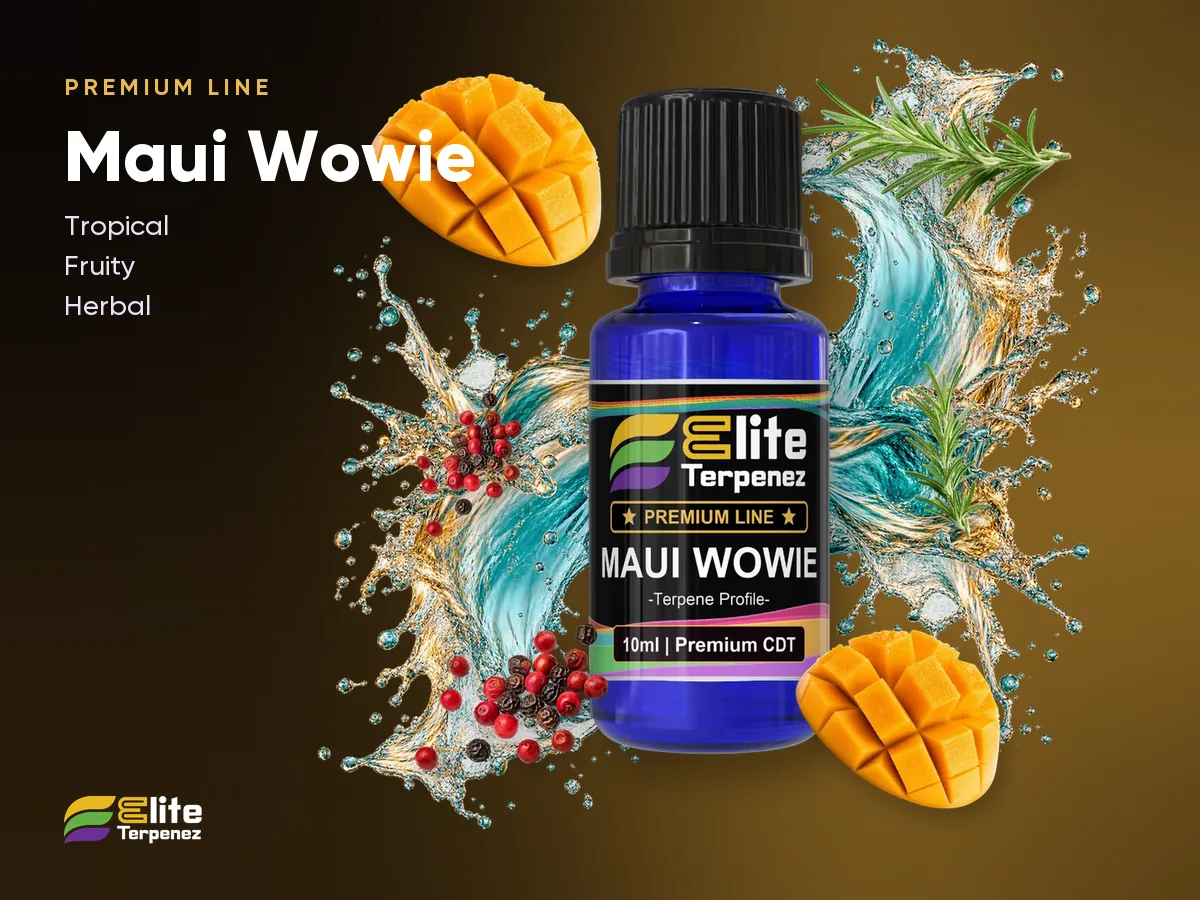
| Maui Wowie | Premium Line (CDT) | Tropical, fruity, herbal |
| Jack Herer | Natural Terpenes (BDT) | Bright pine, zesty citrus, spicy herbal finish |
| Thai Stick DNA | DNA Series (CDT/BDT) | Bright citrus, sweet spice, woody herb |
| Sativa Blend | Classic Strains (BDT) | Zesty citrus, fresh pine, tropical fruit |
| Jack | Classic Strains (BDT) | Crisp lemon, fresh pine, spicy herb |
| Hawaiian Haze | Flavour Infused (BDT) | Juicy pineapple, ripe mango, sunny tropical finish |

For a herbal tropical direction, start with Maui Wowie. For a bright citrus, pine and herb direction, look at Jack Herer, Thai Stick DNA or Jack. For a fruit-led tropical profile, look at Hawaiian Haze or Sativa Blend. To browse more, see the Premium Line, Natural Terpenes and DNA Series collections, or the full Flavour Catalogue.
For cannabinoid content of any profile other than the Diamond Line, contact us and we will confirm before you order. Diamond Line terpenes contain no THC or other cannabinoids. Cannabis flower is a controlled drug in the UK and Elite Terpenez does not sell cannabis.

What do fenchol and ocimene pair with?
Both molecules work as supporting notes, and many popular flavours are a sweet, green or camphor-fresh lift over something fruity, piney or earthy. Use these pairings as a guide when you plan a blend or choose between profiles:
| Pair these notes with | Resulting impression | Example listed aroma notes |
|---|---|---|
| Tropical fruit and herb | Green, ripe tropical | Maui Wowie Premium Line: tropical, fruity, herbal |
| Pine and citrus | Crisp, fresh forest | Jack Herer Natural Terpenes: bright pine, zesty citrus, spicy herbal finish |
| Citrus and woody herb | Dry, spiced citrus | Thai Stick DNA: bright citrus, sweet spice, woody herb |
| Pineapple and mango | Sweet, sunny fruit | Hawaiian Haze: juicy pineapple, ripe mango, sunny tropical finish |
These are separate profiles from the Elite range, each with its own listed notes. They show the direction of the pairing and say nothing about what any bottle contains. For the resinous pine side of the aroma wheel, our pinene guide covers the molecule that often sits beside fenchol in plant oils, and our terpinolene guide covers another fresh, slightly floral partner.
How do makers use fenchol and ocimene for flavour and aroma?
Makers use sweet, herbal and camphor-fresh notes to add lift and a green, natural edge to a recipe. They are popular where a fruity flavour needs a fresh, herbal finish, and in strain-style recipes where a bright, sativa-style character is part of the target. They also pair easily with citrus and pine.
A few practical points:
- Use them as accents: both are minor notes in nature, and too much turns thin or sharp.
- Build, do not stack: pair them with fruit, citrus or pine to avoid a flat, single-note result.
- Test small: run a small batch, wait a day, and re-smell it before scaling.
- Expect ocimene to fade first: as a light, open-chain hydrocarbon it is volatile and can oxidise, so its sweet top note fades before the base does.
What are the starting cuts and handling rules?
Terpene profiles are concentrated and must never be used undiluted. Elite Terpenez’s starting cuts are 6% for vape cartridges, 4% for concentrates, 2% for tinctures, 1% for edibles, 0.5% for beverages and 3% for topicals. Use the terpene mixing calculator to turn a percentage into a weight, and always test a small batch first.
Ocimene is listed on PubChem as a flammable liquid and vapour, as an aspiration hazard if swallowed and as harmful to aquatic life in many notifications. Wear gloves and eye protection, keep every bottle away from children, pets, heat and flames, and work in a ventilated space. For general workplace guidance, see the HSE’s COSHH basics. Products are for adults (18+) only. This guide is about flavour and aroma, and it is not medical advice.
Storage
Store terpene bottles tightly closed in a cool, dark place; refrigerated is ideal. Light, warmth and air speed up oxidation, so a half-empty bottle left open will lose its freshness faster than a full, closed one. Decant what you need and reseal promptly.
If a sweet, herbal profile starts to smell flat, sharp or stale, it has probably aged. It is better to test a fresh bottle than to adjust your recipe to compensate. Label the date you opened each bottle so you can track how long it has been in use.
Sizes and bulk
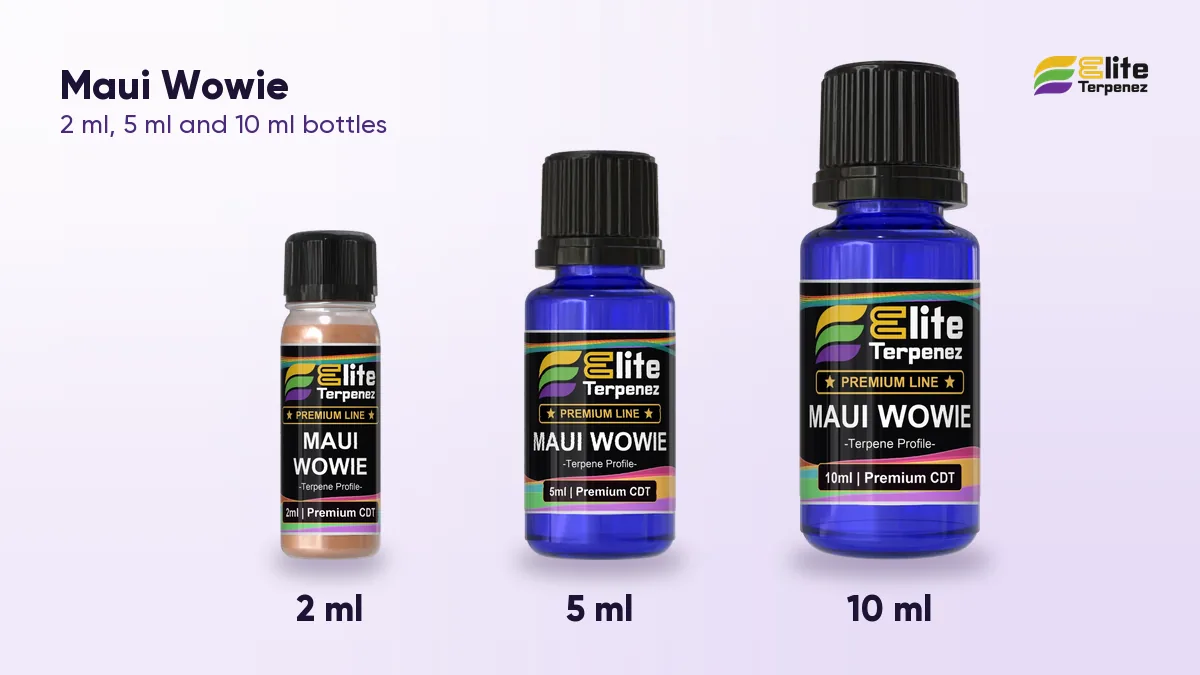
Profiles come in 2 ml, 5 ml and 10 ml bottles. For larger runs, ask about bulk on the wholesale and bulk page. Free UK delivery on orders over £80.
Frequently asked questions
What is fenchol?
Fenchol is a bicyclic monoterpenoid alcohol with the formula C10H18O and CAS number 1632-73-1. It is a white to pale yellow crystalline solid or thick liquid that smells camphor-like with a lemon edge, and it boils at about 201 to 202 C. It is a minor component of basil and other aromatic plants.
What is ocimene?
Ocimene is an acyclic monoterpene with the formula C10H16 and a molecular weight of 136.23 g/mol. It exists as alpha and beta isomers, and the beta form is sold under CAS 13877-91-3. It smells sweet, warm and herbaceous and occurs in basil, mint, mango and many flowers.
What does ocimene smell like?
Ocimene smells sweet, herbaceous and slightly woody, and PubChem describes a warm herbaceous aroma. Perfumers also describe a green, tropical-fruit and floral lift. It is sweeter and lighter than the earthy, musky smell of myrcene, which has the same formula but a different arrangement of double bonds.
Is ocimene the same as myrcene?
No. Ocimene and myrcene are isomers: both are C10H16 open-chain hydrocarbons, but their double bonds sit in different places. Myrcene (CAS 123-35-3) smells earthy and musky, while ocimene (CAS 13877-91-3) smells sweet and herbaceous. Compare CAS numbers when you check supplier listings.
Is fenchol a terpene or a terpenoid?
Fenchol is a terpenoid. Its formula, C10H18O, includes an oxygen atom in an alcohol group, so it is not a pure hydrocarbon. Ocimene, with the formula C10H16 and no oxygen, is a terpene. In everyday use, product labels call both groups terpenes.
Which Elite Terpenez profiles have a sweet herbal or tropical aroma?
Profiles with a tropical, herbal or fresh pine aroma include Maui Wowie, Jack Herer, Thai Stick DNA, Sativa Blend, Jack and Hawaiian Haze, across five lines. Each lists its own aroma notes on its product page. Elite Terpenez does not sell single-molecule fenchol or ocimene products and does not state the contents of its profiles.
Which Elite Terpenez profiles are suggested for fenchol and ocimene, and what are their listed notes?
Start with Premium Line Maui Wowie (tropical, fruity, herbal); Natural Terpenes Jack Herer (bright pine, zesty citrus, spicy herbal finish); DNA Series Thai Stick DNA (bright citrus, sweet spice, woody herb). Notes come from each product page, and every profile is sold in 2 ml, 5 ml and 10 ml bottles.
Ready to build a sweet, herbal flavour? Browse the Premium, Natural Terpenes and DNA ranges, order samples in 2 ml bottles, or contact us for bulk quantities and to confirm anything about a profile before you order.