







Key takeaways
- Terpenes are volatile hydrocarbons built from isoprene (C5H8). Two units make a monoterpene (C10), three make a sesquiterpene (C15).
- Terpenoids are terpenes that carry oxygen, such as linalool, geraniol and citral. In everyday trade, “terpenes” usually covers both.
- In a finished product, terpenes are aroma and flavour ingredients. Small, light molecules show up first (top notes); heavier ones last longer (base notes).
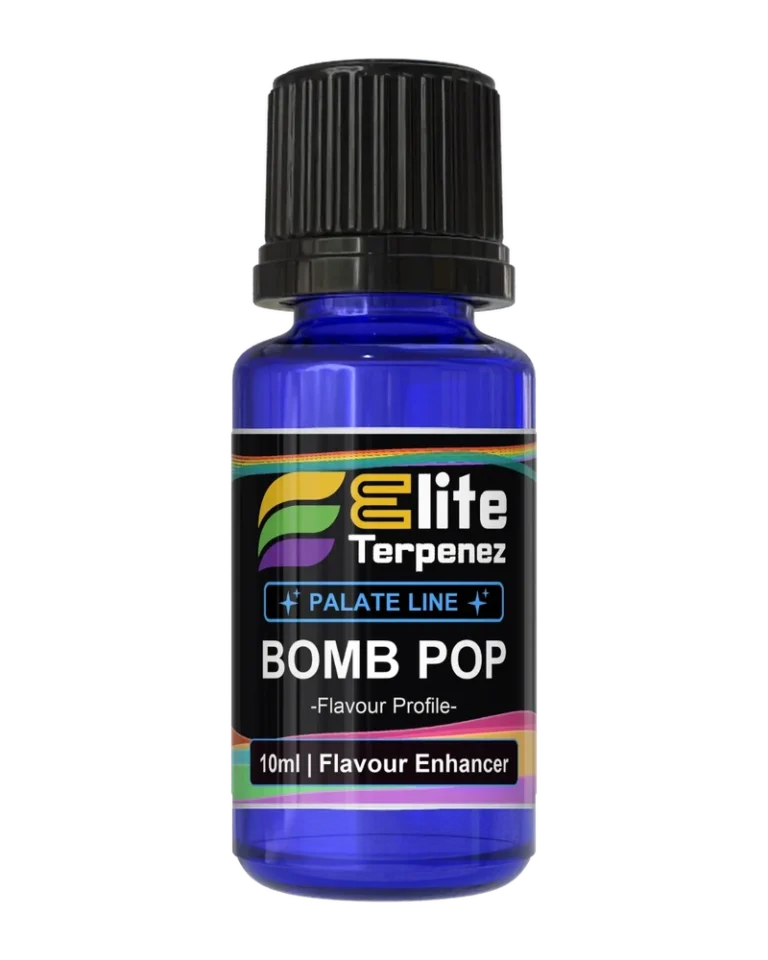
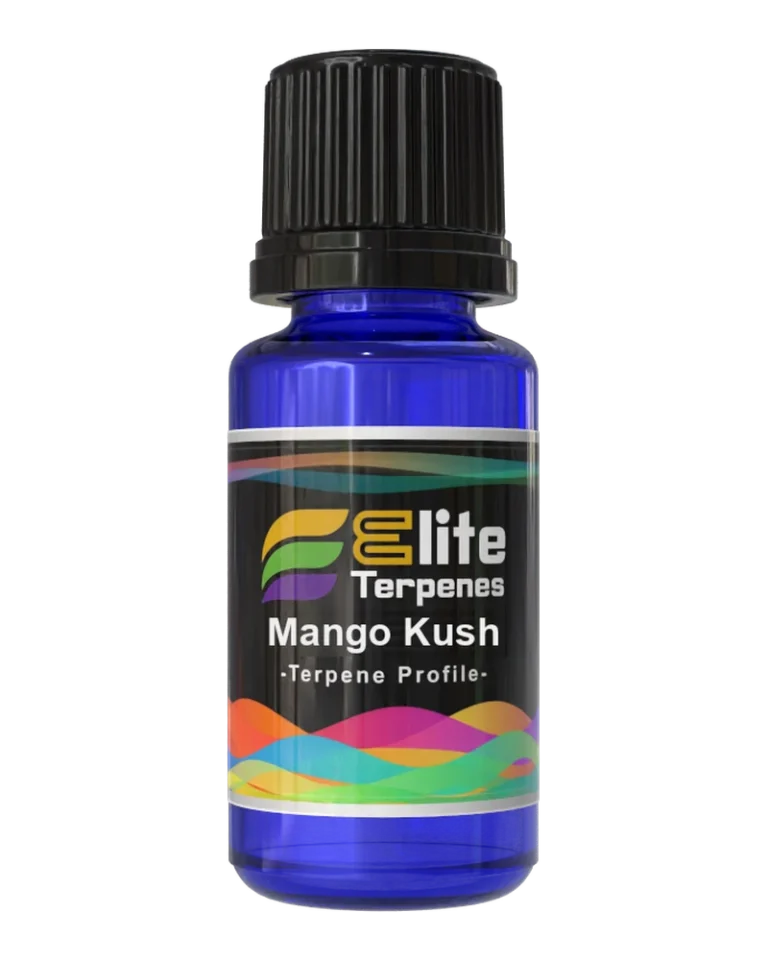
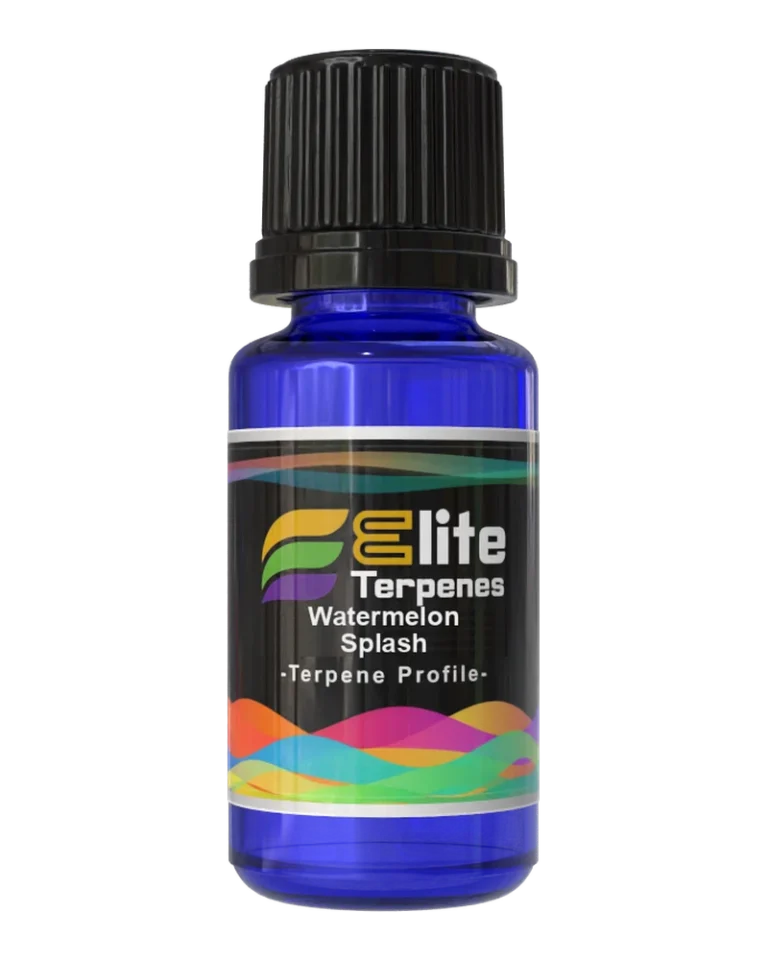
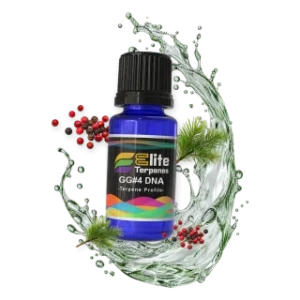
- A terpene profile is a recipe of aroma molecules. Elite Terpenez sells 471 profiles across five lines, in 2 ml, 5 ml and 10 ml bottles.
- Always dilute concentrated terpenes, test a small batch first, and store them cool, dark and tightly closed. Starting cuts run from 0.5% to 6% depending on the product.
What are terpenes?
Terpenes are a very large family of natural organic compounds made of carbon and hydrogen. Every one of them is assembled from the same small building block, isoprene, which has the formula C5H8 and is catalogued in PubChem’s isoprene record. Join two isoprene units and you get a ten-carbon monoterpene such as limonene or myrcene (both C10H16). Join three and you get a fifteen-carbon sesquiterpene such as caryophyllene (C15H24).
The name comes from turpentine, the pine resin product in which chemists first studied these molecules. The German chemist August Kekulé is credited with coining “terpene” in the nineteenth century. Today tens of thousands of terpene and terpenoid structures are known, which is why a lemon, a pine forest and a hop field can all smell so different while sharing the same basic chemistry.
Three ideas are enough to start with:
- Terpenes are small and volatile. They evaporate easily, which is exactly why we can smell them.
- They are built on a pattern. Count the carbons and divide by five to see how many isoprene units a molecule contains.
- Each one has its own aroma. Limonene smells of citrus peel, pinene of pine, linalool of flowers, caryophyllene of pepper and spice.
This page is the plain-English hub for everything else on the site. Use the contents list above to jump to a question, or read it through from the top.
Where do terpenes come from in nature?
Terpenes are made by plants, and also by some fungi, insects and bacteria. Plants produce them in tiny glands, resin ducts and oil sacs, which is why scratching a citrus peel or crushing a pine needle releases a burst of scent. The two-step recipe is the same everywhere: the plant makes isoprene-based building blocks, then enzymes join and fold them into hundreds of different shapes.
You meet terpenes every day, often without noticing. A short tour of familiar sources shows how widely they are spread:
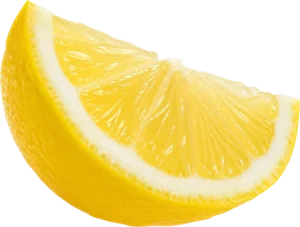
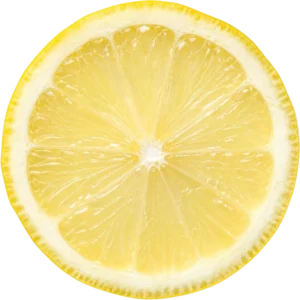
- Citrus peel: orange, lemon and clementine oils are made largely of limonene, which can account for around nine-tenths of orange peel oil.
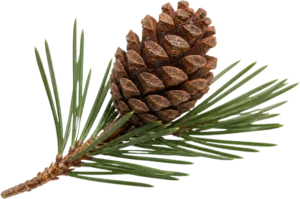
- Conifers: pine, spruce and fir resin carry pinene, the smell of a forest in the sun.
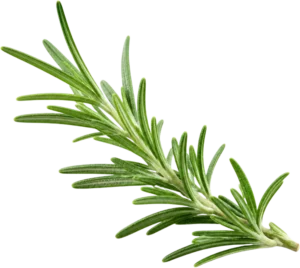
- Herbs and spices: rosemary, basil, thyme, black pepper and cloves each lean on their own terpene mix. Black pepper and cloves are rich in caryophyllene.
- Flowers: lavender, rose, jasmine and chamomile carry linalool, geraniol and bisabolol.
- Hops: the beer ingredient contains myrcene, humulene and caryophyllene, which is why humulene is named after Humulus lupulus.
- Fruit: mango, grape and apple skin carry small amounts of several terpenes.
- The cannabis plant: it produces dozens of terpenes, and the smell of a strain is mostly down to its terpene mix.
Review papers on plant chemistry, such as this open-access overview of terpene biochemistry, describe how widely these molecules are spread. For the specific aroma and source of one molecule, our single-terpene guides go deeper, for example pinene, geraniol and citral.
Natural amounts vary with the plant variety, the region and the extraction method, so no source has one fixed recipe. That variation is the reason a supplier blends and tunes a profile rather than relying on a single raw oil.
What do terpenes do in a product?
In a finished product, terpenes provide aroma and flavour. That is their whole job on this site. Elite Terpenez sells terpenes as flavour and aroma ingredients and makes no claims about effects. What you can say precisely is how a terpene smells, how fast it evaporates and how it behaves next to the other ingredients.
The key idea is volatility. A molecule with a low boiling point leaves the liquid quickly, so you smell it first. A molecule with a higher boiling point lingers. Perfumers use this to describe a scent as three layers, and the same logic applies to flavour work:
| Layer | What you notice | Typical molecules | Rough boiling range | How it reads |
|---|---|---|---|---|
| Top notes | The first impression, gone quickly | Pinene, myrcene, limonene | About 155 to 180 C | Fresh pine, zesty citrus, fruit |
| Middle notes | The body of the aroma | Linalool, terpinolene, borneol | About 185 to 215 C | Floral, herbal, camphor |
| Base notes | What remains and lingers | Geraniol, caryophyllene, bisabolol | About 230 C and above | Rose, pepper, soft floral, wood |
Boiling points here are rounded from PubChem records. They are a guide to the order of evaporation, not a fixed rule, because the other ingredients in a blend change how each note behaves. The practical lesson: a profile loaded with light top-note molecules smells brilliant when you open the bottle but fades faster than one with a strong base.
The question “what do terpenes do” is often asked about the plant itself. Plants make terpenes as part of their own chemistry, and botanists study the reasons. For a product maker the answer is simpler: they supply the smell and taste that make a product recognisable.
What types of terpenes are there?
Terpenes are grouped by how many isoprene units they contain. Review articles such as this open-access paper on terpenes in essential oils use the same scheme: hemiterpenes (one unit), monoterpenes (two), sesquiterpenes (three), diterpenes (four) and so on. The size of the molecule largely decides how easily it evaporates.
| Class | Isoprene units | Carbons | Typical formula | Volatility | Examples |
|---|---|---|---|---|---|
| Hemiterpenes | 1 | 5 | C5H8 | Extremely volatile (isoprene boils at 34 C) | Isoprene, prenol |
| Monoterpenes | 2 | 10 | C10H16 | Volatile (about 150 to 200 C) | Limonene, myrcene, pinene, terpinolene, ocimene |
| Sesquiterpenes | 3 | 15 | C15H24 | Less volatile (about 250 C and above) | Caryophyllene, humulene, farnesene |
| Diterpenes | 4 | 20 | C20H32 | Semi-volatile to non-volatile | Phytol, abietic acid |
| Sesterterpenes | 5 | 25 | C25H40 | Non-volatile, rare | Found mostly in fungi, marine life and some plants |
| Triterpenes | 6 | 30 | C30H50 | Non-volatile (squalene boils at about 421 C) | Squalene, lanosterol |
| Tetraterpenes | 8 | 40 | C40H64 | Non-volatile pigments | Beta-carotene |
For flavour and aroma work, only the first three rows matter. Diterpenes and larger molecules are too heavy to evaporate and carry scent, so they play little part in what you smell. Monoterpenes make up the bright, quickly-moving top of most profiles. Sesquiterpenes add depth and a slow finish. That is why the same product can smell different a minute after opening and an hour later.
Within each class, molecules differ by shape. They can be a straight chain (acyclic, like myrcene), a single ring (monocyclic, like limonene) or two joined rings (bicyclic, like pinene). Two molecules can share the same formula yet smell completely different, because the arrangement of atoms is different. Limonene and terpinolene are both C10H16; one smells of orange peel, the other of sweet pine with a floral edge.
What is the difference between terpenes, terpenoids, flavonoids and cannabinoids?
These four words are often mixed up. Terpenes and terpenoids are close relatives. Flavonoids and cannabinoids are different chemical families that sometimes turn up in the same plants. The table gives the short version.
| Term | What it is | Built from | Contains oxygen? | Role in a product | Examples |
|---|---|---|---|---|---|
| Terpene | Hydrocarbon aroma molecule | Isoprene units | No (carbon and hydrogen only) | Aroma and flavour | Limonene, myrcene, pinene, caryophyllene |
| Terpenoid | A terpene that has been modified or has oxygen added | Isoprene units | Yes (alcohol, aldehyde, ketone and so on) | Aroma and flavour | Linalool, geraniol, citral, borneol, bisabolol |
| Flavonoid | A plant pigment and flavour molecule | A different pathway (phenyl rings) | Yes | Colour and some taste | Quercetin, anthocyanins |
| Cannabinoid | A compound made by the cannabis plant | A mixed pathway that borrows terpene parts | Yes | Not an aroma ingredient | A separate family, not an aroma ingredient |
Strictly speaking, “terpenoid” is the wider word, since a terpenoid is any molecule derived from the terpene pattern. Linalool, geraniol and borneol are terpenoids because they carry an alcohol group. The trade, and this site, uses “terpenes” for both, except where the difference matters, as it does in our geraniol guide and borneol guide.
Cannabinoids are a separate family and not terpenes at all. The plant builds them using a terpene-like part, which is one reason the two are mentioned together, but chemically and commercially they are different things. Diamond Line terpenes contain no THC or other cannabinoids. For the other lines, contact us and we will confirm before you order.
What are the main terpenes and what do they smell like?
Hundreds of terpenes exist, but a handful carry most of the aromas people recognise. The table lists twelve you will see on supplier sheets and in the aroma notes of terpene products, with the numbers a buyer needs. Data comes from PubChem records, with boiling points at normal pressure unless stated.
| Terpene | Formula | CAS number | Smells like | Found in | Boiling point |
|---|---|---|---|---|---|
| Myrcene (monoterpene) | C10H16 | 123-35-3 | Earthy, musky, fruity, herbal | Hops, mango, lemongrass, thyme | About 167 C |
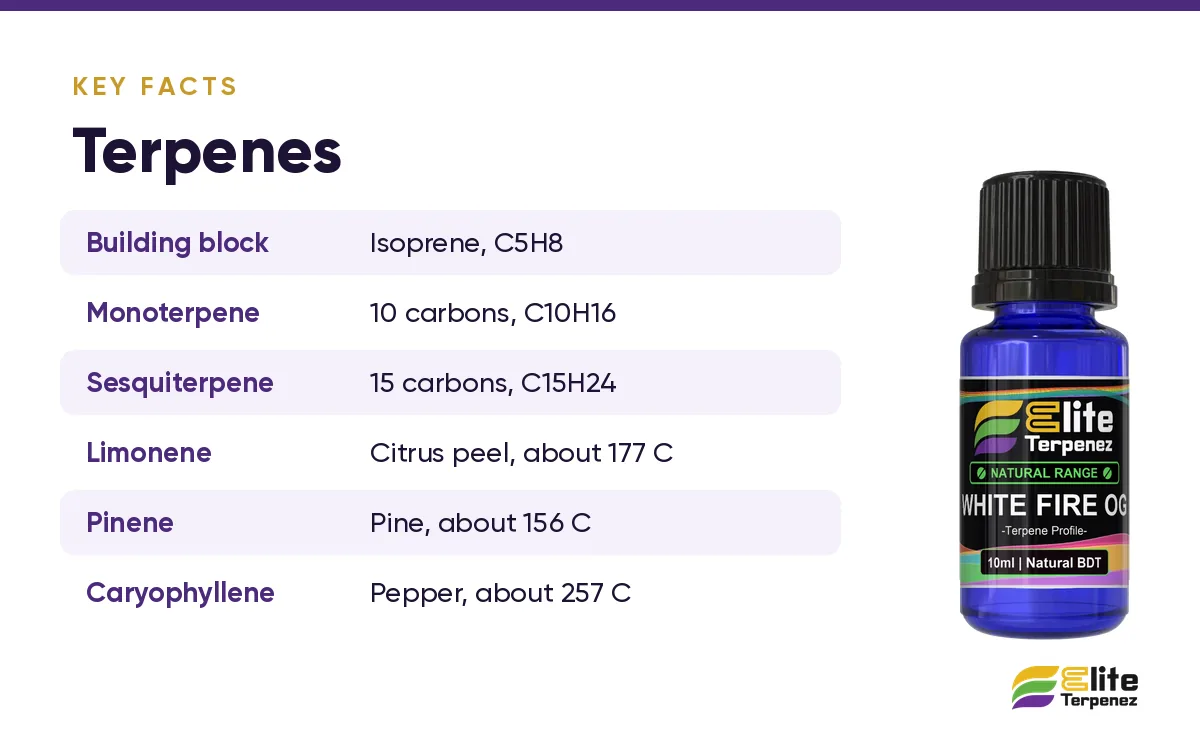
| Limonene (monoterpene) | C10H16 | 138-86-3 | Fresh orange and lemon peel | Citrus peel oils | About 176 to 178 C |
| Caryophyllene (sesquiterpene) | C15H24 | 87-44-5 | Black pepper, warm spice, wood | Black pepper, cloves, hops, rosemary | About 256 to 259 C |
| Alpha-pinene (monoterpene) | C10H16 | 80-56-8 | Fresh pine, resin, rosemary | Conifers, rosemary, basil | About 155 to 156 C |
| Linalool (terpenoid) | C10H18O | 78-70-6 | Floral, lavender, light citrus | Lavender, coriander, basil | About 198 C |
| Terpinolene (monoterpene) | C10H16 | 586-62-9 | Sweet pine, fresh, floral, light citrus | Tea tree, nutmeg, conifers | About 183 to 187 C |
| Humulene (sesquiterpene) | C15H24 | 6753-98-6 | Woody, earthy, hoppy spice | Hops, sage, ginseng, cloves | About 99 to 100 C at 3 mmHg (vacuum); far higher at normal pressure |
| Ocimene (monoterpene) | C10H16 | 13877-91-3 (mixed isomers) | Sweet, herbal, woody, tropical | Basil, mint, parsley, mango | About 174 to 175 C |
| Bisabolol (terpenoid) | C15H26O | 515-69-5 | Soft, sweet, floral, chamomile-like | German chamomile, candeia tree | About 151 to 152 C at 12 mmHg (vacuum) |
| Geraniol (terpenoid) | C10H18O | 106-24-1 | Sweet rose, geranium | Rose, palmarosa, citronella | About 229 to 230 C |
| Citral (terpenoid) | C10H16O | 5392-40-5 | Sharp lemon | Lemongrass, lemon myrtle, lemon peel | About 228 to 229 C |
| Borneol (terpenoid) | C10H18O | 507-70-0 | Pine, camphor, cool woody | Camphor wood, rosemary, lavender | About 212 C |
Read the aroma column as a smell description, nothing more. Each of these molecules has its own PubChem entry if you want the raw data, for instance limonene and caryophyllene. Four things are worth remembering when you compare suppliers:
- Check the CAS number. Limonene appears as 138-86-3 for the general material and 5989-27-5 for the d-form; pinene and bisabolol each have several entries.
- Isomers matter. Alpha-pinene and beta-pinene share a formula yet smell different. Citral is itself a mixture of two isomers, geranial and neral.
- No single molecule smells like a strain. A strain’s aroma comes from a combination.
- Neighbours change the picture. Linalool beside citrus smells different from linalool beside pine.
We publish single-molecule guides for the less obvious ones: geraniol, pinene, bisabolol, terpinolene, citral and borneol. They sit in the Guides section of the journal, together with newer explainers.

More single-terpene guides: humulene, eucalyptol, terpineol, fenchol and ocimene, nerolidol, and the explainer terpenoids: how they differ from terpenes.
What is a terpene profile, and what are strain-specific terpenes?
A terpene profile is the particular mix of terpenes and other aroma molecules that makes up one smell. A plant’s profile is set by its genetics, its environment and how it is processed afterwards. When someone says “this strain smells of lemon, fuel and spice”, they are describing a terpene profile in everyday words.
Strain-specific terpenes are profiles built to match the aroma and flavour of a named cultivar, such as Biscotti, Gelato or Sour Diesel. Reports of what lab tests commonly find in the flower often point to caryophyllene, limonene and myrcene, but a strain’s character comes from the many smaller components around them. For that reason we describe our profiles by their listed aroma notes rather than by percentages.
A strain’s aroma is recreated in one of two ways:
- From the plant itself. Cannabis-derived terpenes (CDTs) are extracted from the strain and refined to keep its character. These are the Diamond Line and Premium Line.
- From botanical sources. Botanical-derived terpenes (BDTs) are blended from non-cannabis plants and flavouring to match the target aroma. These are the Natural, Infused and Flavour Catalogue ranges.
Our strain write-ups show how this works for individual flavours, including Biscotti, Lemon Cherry Gelato, Ice Cream Cake, Purple Punch, Sour Diesel and Blue Zushi. Each covers the flavour, the reported lineage and the Elite profiles that carry it. Elite Terpenez does not sell cannabis, and the strain names describe a flavour, not a product that contains the plant.

Cannabis-derived or botanical-derived terpenes: what is the difference?
Both types are real terpenes. The difference is where the aroma molecules come from. Neither is better in every case, and the honest answer depends on what you are making and what you need to document.
| Question | Cannabis-derived (CDT) | Botanical-derived (BDT) |
|---|---|---|
| Where do they come from? | The cannabis plant | Other plants, such as citrus, pine, herbs and flowers, plus flavouring where listed |
| How is the aroma matched? | By extracting the strain’s own terpene mix and refining it | By blending ingredients to match a target aroma |
| Strain nuance | Closest to the original, since it comes from it | A faithful recreation of the smell, built deliberately |
| Consistency | Depends on the source material and refinement | Controlled by the blend recipe |
| Elite lines | Diamond Line, Premium Line; DNA Series uses both types | Natural Terpenes, Infused Terpenes and the other Flavour Catalogue series |
| What to ask your supplier | Source, refinement and what documentation exists for the product | Ingredients, flavouring and what documentation exists for the product |
The source can matter for compliance in your own product, so ask before you build a recipe around a profile. The ingredient field on every Elite product page states whether it is CDT, BDT or both and whether flavouring is listed. Whichever you choose, the product is sold for its aroma and flavour only.
If you already work with another supplier’s profile, tell us what you use and we will suggest the closest Elite match. Details are on the wholesale and bulk page, and the news post on wholesale accounts for UK brands explains how to apply.
What are Elite Terpenez’s terpene lines?
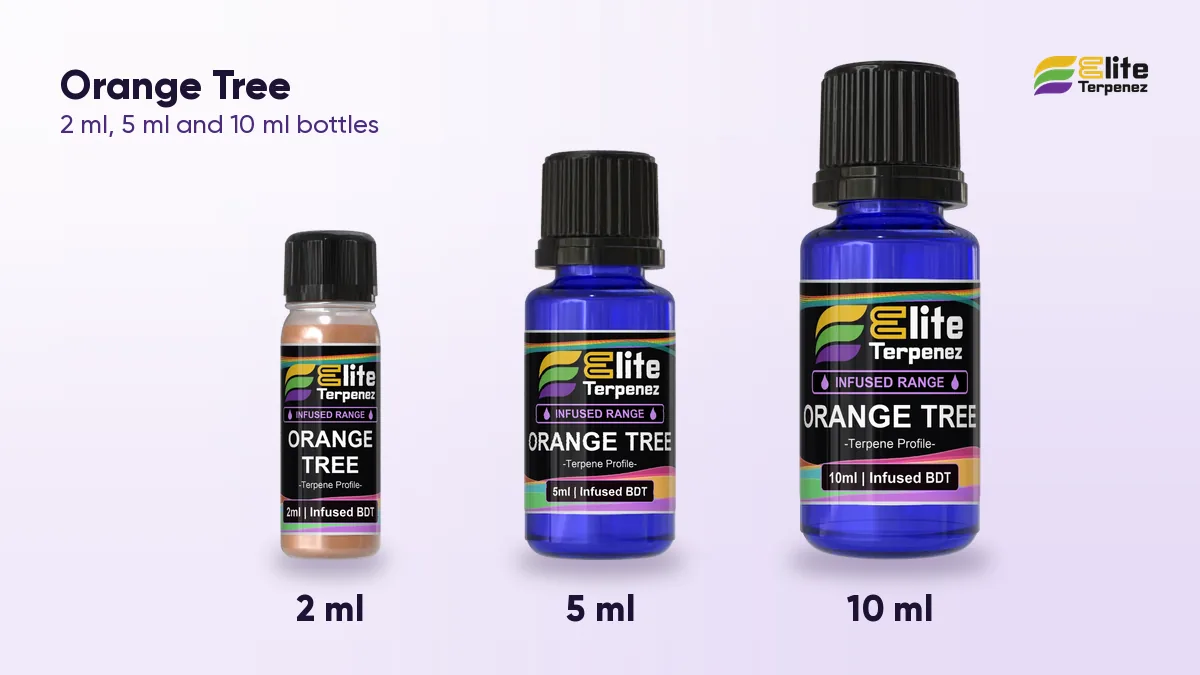
Elite Terpenez sells 471 terpene profiles in five lines, and each profile comes in 2 ml, 5 ml and 10 ml bottles. The lines differ in where the terpenes come from and how they are described, not in what they are for: all are flavour and aroma ingredients for product makers and brands (adults only, 18+).
| Line | Type | Profiles | What it is |
|---|---|---|---|
| Diamond Line | CDT | 17 | Cultivated cannabis-derived terpenes from a hydrocarbon-based extraction with tailored refinement to keep each strain’s nuance. Diamond Line terpenes contain no THC or other cannabinoids. Certified free of pesticides, heavy metals and residual solvents. |
| Premium Line | CDT | 64 | Live resin style, strain-specific cannabis-derived terpenes, each listed with its primary flavour, flavour notes and dominant terpenes. |
| Natural Terpenes | BDT | 61 | Natural botanical-derived profiles that capture the aroma and flavour of classic and modern strains. |
| Infused Terpenes | BDT | 87 | Bold strain and dessert flavours for product makers. |
| Flavour Catalogue | BDT, plus CDT in DNA Series | 242 | Every flavour series in one place (the five series below). |
The Flavour Catalogue is made up of five series, which you can also browse on their own:
- DNA Series (36 profiles): strain-true profiles built from the original cultivar, using CDT and BDT.
- All Natural Infused (30): strain flavours with natural flavouring.
- Classic Flavour Infused (30): classic strain flavours with an infused lift.
- Flavour Infused (96): fruit, candy, dessert and ice flavours.
- Classic Strains (50): the classic strain profiles people already know and ask for.
Here is how the lines map to the job a maker has in mind. It is a starting point, not a rule:
| If you need… | Start with | Example profile (listed aroma notes) |
|---|---|---|
| The closest match to a named strain, from cannabis-derived terpenes | Diamond Line or Premium Line | Biscotti Diamond Line (sweet cookies, butter, diesel, spice) |
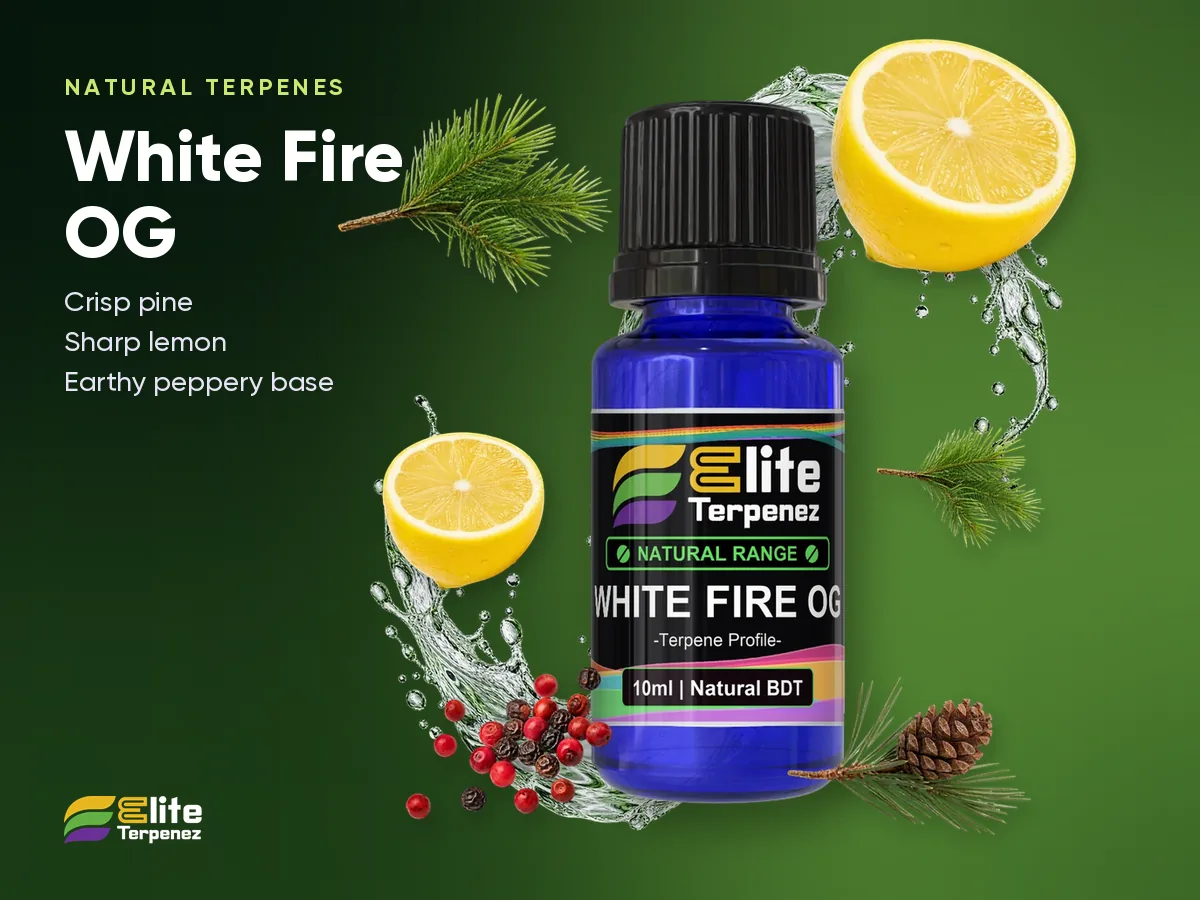
| A strain aroma without cannabis-derived terpenes | Natural Terpenes or Classic Strains | White Fire OG (crisp pine, sharp lemon, earthy peppery base) |
| A bold dessert or candy flavour | Infused Terpenes or Flavour Infused | Blue Zkittles (blue raspberry candy, sweet berry, tangy sugar finish) |
| A strain flavour with a flavouring lift | Classic Flavour Infused or All Natural Infused | Biscotti All Natural Infused (toasted cookie dough, sweet spice, nutty earthy edge) |
| A profile built from the original cultivar | DNA Series | Blue Zushi DNA (sweet blueberry, cool mint, gassy tropical finish) |
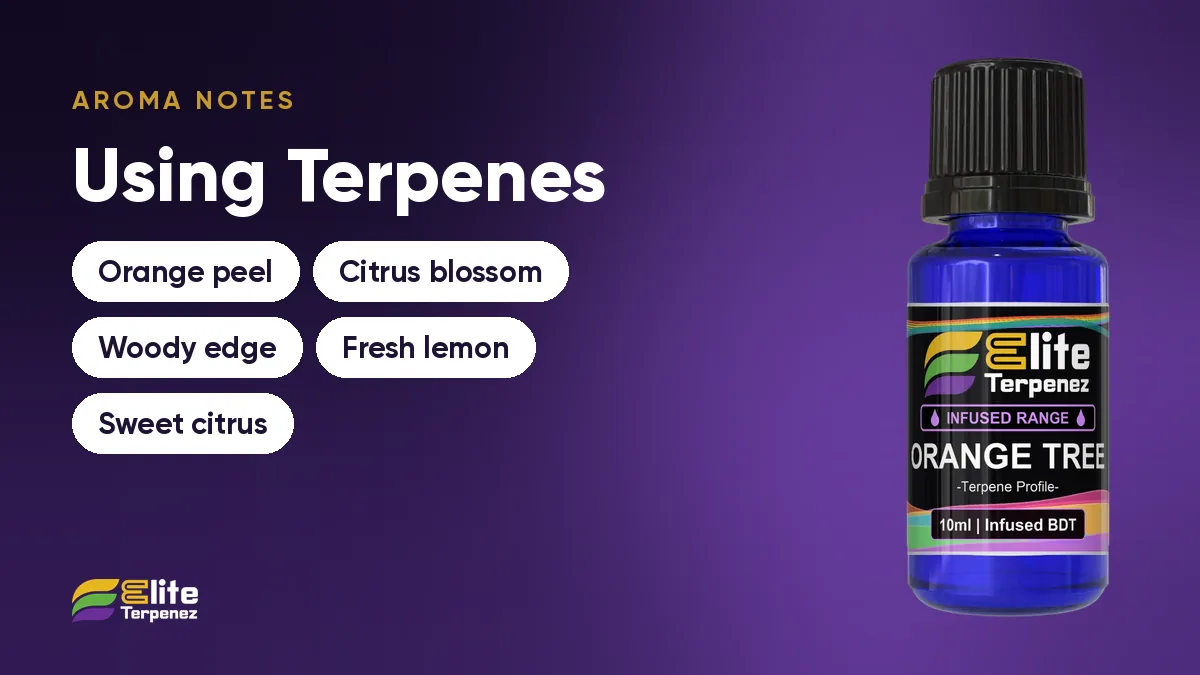
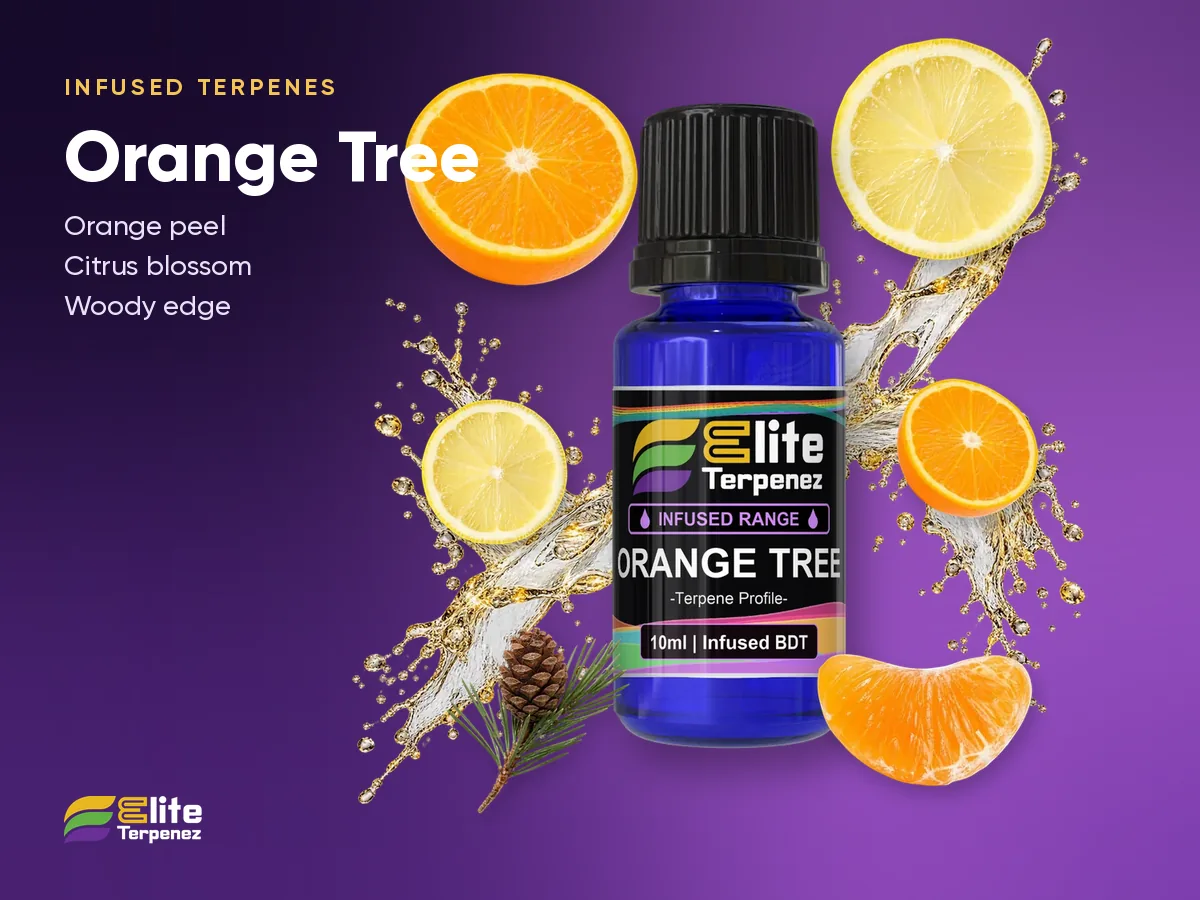
| A citrus-led lift | Any line | Orange Tree (orange peel, citrus blossom, woody edge) |
Each product page lists its own aroma notes and ingredients. We describe profiles only by those listed notes and never state a recipe or percentage. The same flavour often exists in more than one line, so you can compare, for example, Biscotti in the Diamond Line with Biscotti in Classic Flavour Infused. Free UK delivery on orders over £80.


Choosing between lines? Read strain specific terpenes explained for how a profile is rebuilt, how to choose a UK terpene supplier for a buyer checklist, and what are terps for the slang.
How do you choose a terpene profile?
Choose by aroma first, then by base product, line and budget, and confirm with a 2 ml sample. A short sequence saves wasted batches:
- Pick an aroma family. Citrus, pine and forest, floral, fruit and candy, dessert and cream, fuel and earth, or spice. Our product pages list three aroma notes per profile, so scan those.
- Think about the base product. A rich, creamy base softens citrus and tends to carry dessert notes well. A thin, clear base shows every detail, good or bad.
- Choose the line. Decide whether you need cannabis-derived terpenes (Diamond, Premium, DNA) or botanical-derived ones (Natural, Infused and the rest of the Flavour Catalogue).
- Set a budget in terms of use. A profile that works at 1% costs less per batch than one you need at 6%, so compare cost per finished unit, not per bottle.
- Order a 2 ml sample. Blend a small test batch, let it rest, then judge the aroma again after a day.
A quick guide to aroma families and where to look:
- Citrus: Super Lemon Haze (Classic Strains) lists fresh lemon, lemon peel and sweet citrus; Clementine lists citrus, sweet and fresh.
- Pine and forest: White Fire OG and Skywalker OG both list pine in their notes.
- Floral: Blueberry Lavender Jones lists soft lavender, and Ghost Train Haze lists sweet, floral and citrus.
- Tropical fruit: Twisted Tropics lists ripe mango, tangy pineapple and a passionfruit twist.
- Cool and minty: Peppermint Mocha lists cool peppermint, rich cocoa and roasted coffee.
- Spice and pepper: King Louis XIII lists sweet earthy pine and peppery spice.
Not sure where to begin? Browse the whole Flavour Catalogue, or use the contact page to describe what you are making and we will suggest options.
How do you use terpenes in a product?
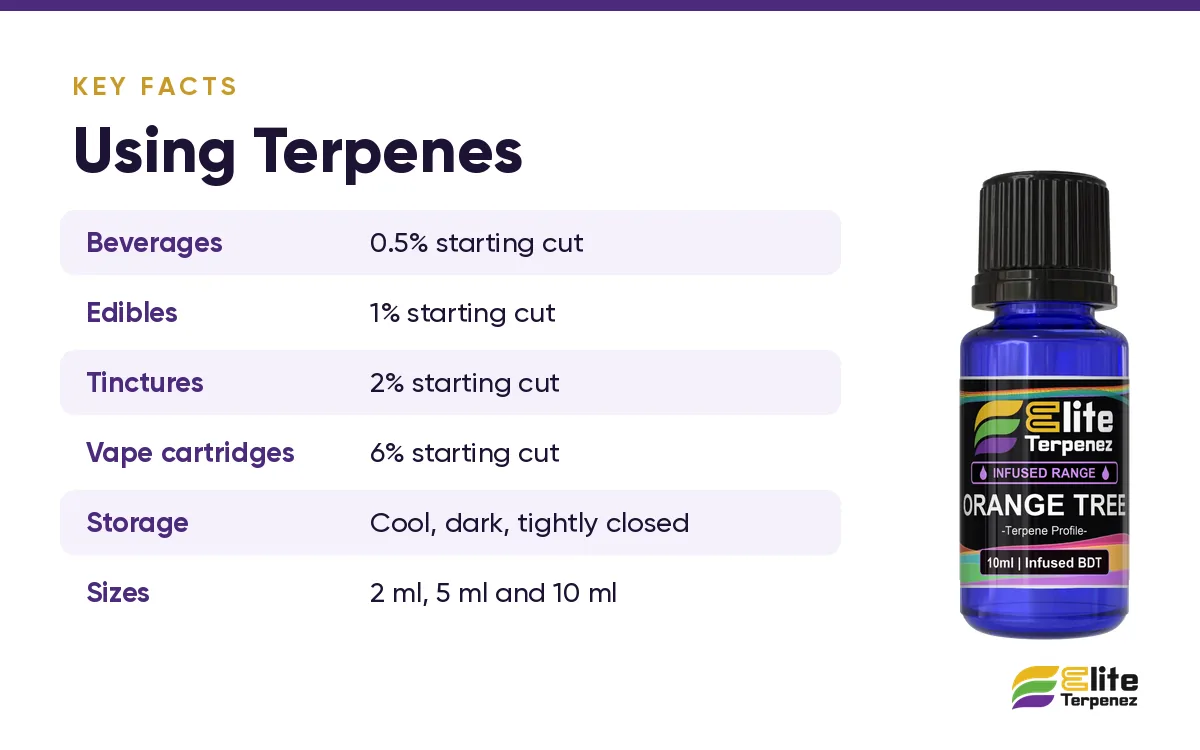
Terpenes are used diluted, never undiluted, at a small percentage of the total weight of a batch. The percentage depends on the product type, the strength of the profile and your own taste, so always start low and test a small batch first. The site’s starting cuts are below.
| Product type | Starting cut (of total weight) | Example in a 100 g batch |
|---|---|---|
| Vape cartridges | 6% | 6 g |
| Concentrates | 4% | 4 g |
| Topicals | 3% | 3 g |
| Tinctures | 2% | 2 g |
| Edibles | 1% | 1 g |
| Beverages | 0.5% | 0.5 g |
These are starting points only, and intended for adults making products within the law. Your base ingredients, recipe and local rules all affect what works for you. A step-by-step approach keeps results repeatable:
- Weigh, do not measure by drop. Use a scale accurate to 0.01 g. Terpene density varies, so weight is more reliable than volume.
- Calculate the cut. Multiply the batch weight by the percentage. For a 50 g batch at 2%, that is 1 g.
- Make a small test batch first. A tenth of your normal size is plenty.
- Mix thoroughly and gently. Add the terpene to the base, mix until it is evenly distributed, and avoid unnecessary heat, which drives off the light top notes.
- Rest, then judge. Compare the smell and taste after a day, not just after mixing.
- Write it down. Record the profile, weight, percentage, base and date so a good batch can be repeated.
The terpene mixing calculator does the arithmetic for you and shows which bottles to order (a mix of 2 ml, 5 ml and 10 ml) for your batch size, pointing to bulk when the batch is large. The update is described in our calculator news post. Sizes are explained in the sizes post, and larger volumes are available on request through the wholesale page.
Step-by-step maths, mixing order and test batches: how to use terpenes.
How should you handle and store terpenes?
Store terpenes cool, dark and tightly closed, with as little air in the bottle as possible. Refrigerated storage is ideal. Light, warmth and oxygen are the enemies: they speed up oxidation, which changes the smell and can make the liquid smell flat, sharp or off.
| Factor | What happens | What to do |
|---|---|---|
| Heat | Light top notes evaporate and reactions speed up | Keep cool; refrigerate for longer storage |
| Light | Speeds up oxidation of sensitive molecules | Keep in a dark place or the original bottle |
| Air (headspace) | Oxygen in the empty part of the bottle causes oxidation | Keep bottles full and tightly closed; decant what you need quickly |
| Container | Some plastics absorb or react with concentrated terpenes | Use glass, which is how Elite bottles are supplied |
| Repeated opening | Each opening adds air and loses volatile notes | Reseal promptly; use smaller bottles for slow-moving profiles |
Oxidation is why limonene-led profiles can drift over time. Citral, the lemon-smelling aldehyde, is made when geraniol oxidises, which is why aged floral profiles can swing towards lemon. The practical response is simple: label the date you open each bottle, and if a profile starts to smell different from a fresh sample, test again with fresh material rather than adjusting the recipe to compensate.
Check each bottle’s label for the shelf life. Match your bottle sizes to your rate of use: a 2 ml bottle suits trials, a 10 ml bottle suits regular small batches, and bulk suits production.
How do you check terpene quality and use them safely?
Quality starts with knowing what you are buying and ends with careful handling. Many terpenes are flammable liquids that irritate skin and eyes, and some, such as geraniol and oxidised citrus terpenes, can cause skin sensitisation. Safe habits are not optional.
What to look for in a supplier
- A clear product record. Name, line, listed aroma notes, ingredients (CDT, BDT, flavouring) and size.
- Documentation on request. A certificate of analysis (COA) is a lab report for a specific material. In general terms it can show identity and composition measured by gas chromatography, and test results for items such as pesticides, heavy metals or residual solvents. Ask what documentation exists for the exact product you plan to buy.
- Honest labelling. Our bottle labels were rolled out between 21 and 23 October 2026. Each is coded to its line by colour and name, carries a QR code that opens that exact profile and size on the website, and shows the warning text, company address and shelf life. Read how in our label and QR code news post.
- A named seller. Elite Terpenez is sold by ELITETERPENES LTD, UK company 16599313, based in Bolton. See about us and quality and safety.
Safe handling of concentrated terpenes
- Never use a concentrated terpene undiluted; dilute it as set out above.
- Wear gloves and eye protection, and work in a well-ventilated space.
- Keep away from children and pets, and away from heat, sparks and flames.
- Keep bottles tightly closed, labelled and stored as above.
- Clean spills straight away, and follow the warning text on the label.
The UK Health and Safety Executive explains the general approach to chemical hazards on its COSHH basics page. Our own quality and safety page sets out the site’s approach, and the FAQ page covers common order questions. Products are for adults (18+) only.
Are terpenes legal in the UK?
Terpenes are aroma and flavour compounds found in many everyday plants, and they are sold as ingredients in the UK. Whether a particular product is lawful, though, depends on what it contains, where its terpenes come from and how it is used, so there is no single yes or no for every case. This is general information, not legal advice.
Three points to keep clear:
- Cannabis flower is a controlled drug in the UK, and Elite Terpenez does not sell cannabis. Our strain names describe a flavour. The main law is the Misuse of Drugs Act 1971, available on legislation.gov.uk.
- Diamond Line terpenes contain no THC or other cannabinoids. For the other lines, contact us and we will confirm before you order.
- Your own product is your responsibility. If you are making something for sale, check the rules that apply to that product type and take advice if you are unsure.
Elite Terpenez sells terpenes to UK adults and businesses (18+) as flavour and aroma ingredients. We make no claims about medical use, and the information on this site is not medical advice.
Terpene glossary
A short list of the words you will meet on supplier sheets and product pages.
| Term | Meaning |
|---|---|
| Aroma note | A single smell word used to describe a profile, such as “fresh lemon” or “earthy pine”. |
| Boiling point | The temperature at which a liquid turns to vapour. Lower numbers mean the molecule evaporates more readily. |
| BDT | Botanical-derived terpene, from non-cannabis plants. |
| Cannabinoid | A compound made by the cannabis plant. A different chemical family from terpenes. |
| CAS number | A unique registry number for a chemical substance, used to confirm which molecule a supplier means. |
| CDT | Cannabis-derived terpene, extracted from the cannabis plant. |
| COA | Certificate of analysis, a lab report for a specific material. |
| Essential oil | A concentrated plant extract that carries the plant’s scent, usually rich in terpenes. |
| Flavonoid | A plant pigment and flavour compound. Not a terpene. |
| Headspace | The air space at the top of a part-filled bottle. |
| Hydrocarbon | A molecule made only of carbon and hydrogen. Terpenes are hydrocarbons; terpenoids add oxygen. |
| Isomer | One of several molecules with the same formula but a different arrangement of atoms, like alpha- and beta-pinene. |
| Isoprene | The five-carbon building block (C5H8) that every terpene is made from. |
| Monoterpene | A ten-carbon terpene made from two isoprene units, such as limonene. |
| Oxidation | A slow reaction with oxygen that changes a terpene’s smell and quality. |
| Sesquiterpene | A fifteen-carbon terpene made from three isoprene units, such as caryophyllene. |
| Terpene profile | The mix of terpenes and aroma molecules that makes up one smell. |
| Terpenoid | A terpene that has been modified, usually with oxygen, such as linalool. |
| Volatility | How readily a substance evaporates. Volatile molecules reach the nose first. |
Frequently asked questions
What are terpenes?
Terpenes are aromatic compounds made by plants, built from repeating five-carbon isoprene units. They give citrus peel, pine, lavender, hops and the cannabis plant their smell. Chemists group them by size into monoterpenes (10 carbons), sesquiterpenes (15) and larger classes. Makers use them as flavour and aroma ingredients.
What do terpenes do?
In a finished product, terpenes provide aroma and flavour. Light molecules such as limonene and pinene reach the nose first, while heavier ones such as caryophyllene linger. Elite Terpenez sells terpenes as flavour and aroma ingredients and makes no claims about effects. Plants make them as part of their own chemistry.
What are the main types of terpenes?
Terpenes are sorted by isoprene units: hemiterpenes (C5), monoterpenes (C10), sesquiterpenes (C15), diterpenes (C20) and triterpenes (C30). Only the first three are volatile enough to carry a smell. Common aroma examples are limonene, myrcene and pinene (monoterpenes) and caryophyllene and humulene (sesquiterpenes).
What is the difference between terpenes and terpenoids?
Terpenes are hydrocarbons made of carbon and hydrogen only. Terpenoids are terpenes that have been modified, usually with oxygen added, as in linalool, geraniol and borneol. The trade often uses “terpenes” for both. The difference shows up mainly in smell: terpenoids tend to be softer and floral.
Are terpenes the same as cannabinoids?
No. Terpenes and cannabinoids are different chemical families, even though the cannabis plant makes both. Terpenes are aroma molecules built from isoprene units. Diamond Line terpenes contain no THC or other cannabinoids. For the other lines, contact us and we will confirm before you order.
What is the difference between cannabis-derived and botanical-derived terpenes?
Cannabis-derived terpenes (CDTs) are extracted from the cannabis plant and refined to keep a strain’s nuance. Botanical-derived terpenes (BDTs) come from other plants and are blended to match a target aroma. Both are real terpenes sold for aroma and flavour. Check each product’s ingredient field to see which type it is.
What are strain-specific terpenes?
Strain-specific terpenes are profiles built to match the aroma and flavour of a named strain, such as Biscotti or Gelato. They can come from the plant itself (cannabis-derived) or be recreated from botanical sources. Elite Terpenez describes each profile by its listed aroma notes and never states a recipe or percentage.
Are terpenes legal in the UK?
Terpenes are aroma compounds found in many plants and are sold as ingredients, but the answer for any product depends on its contents, source and use. Cannabis flower is a controlled drug in the UK and Elite Terpenez does not sell cannabis. Diamond Line terpenes contain no THC or other cannabinoids. This is not legal advice.
How do I store terpenes?
Store terpenes tightly closed in a cool, dark place, refrigerated if possible, in glass with as little air in the bottle as you can. Heat, light and oxygen speed up oxidation and change the smell. Reseal promptly after use, note the date you opened each bottle and check the label for shelf life.
How much terpene should I use?
Never use concentrated terpenes undiluted. Elite Terpenez’s starting cuts are 6% for vape cartridges, 4% for concentrates, 3% for topicals, 2% for tinctures, 1% for edibles and 0.5% for beverages. Test a small batch first, rest it for a day, and use the terpene calculator for weights.
How do I choose a terpene profile?
Choose an aroma family first, such as citrus, pine, floral, fruit or dessert. Then consider your base product, the line (cannabis-derived or botanical-derived) and cost per finished unit. Each product page lists three aroma notes. Order a 2 ml sample, blend a small test batch and judge it again after a day.
What sizes do Elite Terpenez terpenes come in?
Every profile is sold online in 2 ml, 5 ml and 10 ml bottles, with free UK delivery on orders over £80. Larger volumes are available on request through the wholesale and bulk page. UK brands, makers and manufacturers can apply for a wholesale account there. Products are for adults (18+) only.
Ready to build a flavour? Browse the Flavour Catalogue, the Diamond Line, Premium Line, Natural Terpenes and Infused Terpenes, order 2 ml samples, or contact us for bulk quantities and to confirm anything about a profile before you order.